Therapy Dog Training — Kiln, Mississippi
Prerequisite: Completion of both In-House Obedience and Emotional Support Dog programs
Get StartedTherapy Dog Training in Mississippi
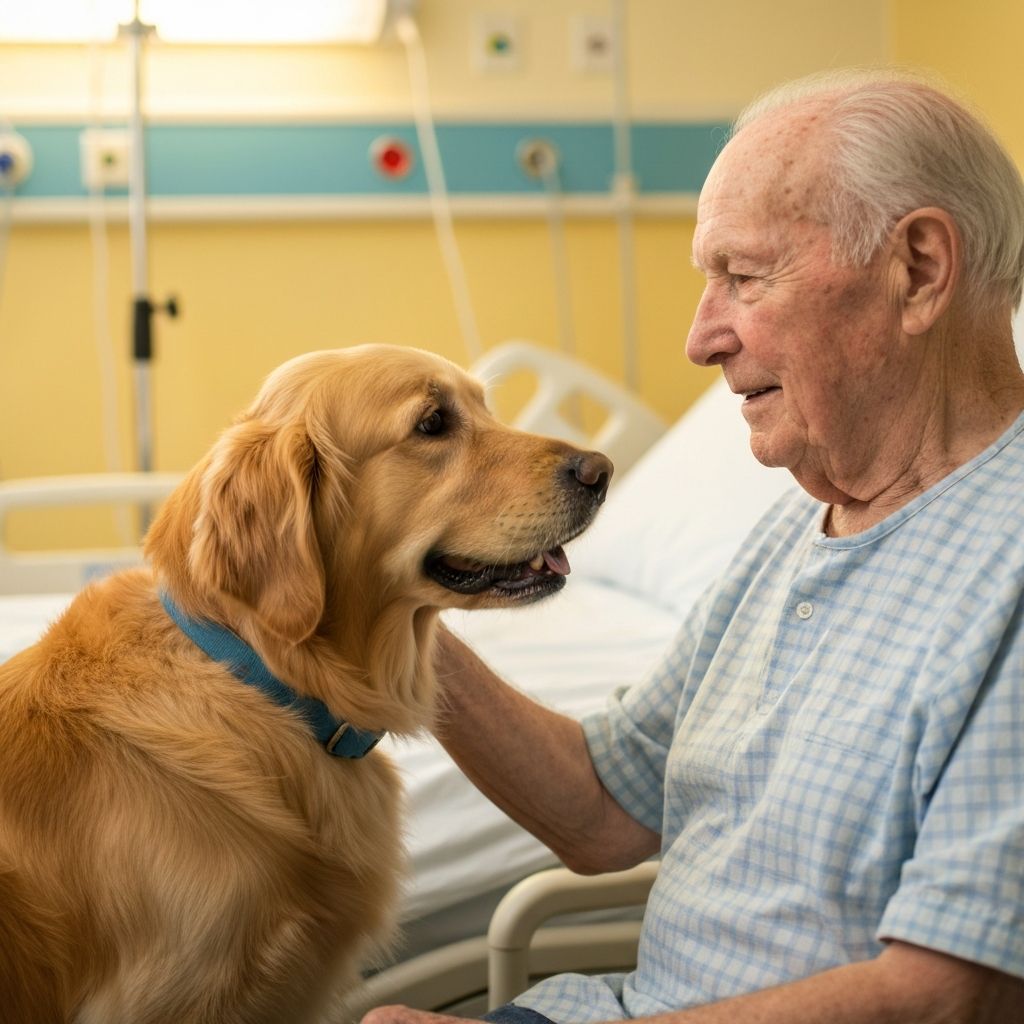
A therapy dog is a trained dog who provides comfort, affection, and emotional support to people in hospitals, nursing homes, schools, libraries, hospice facilities, courthouses, college campuses, disaster recovery sites, and other community settings. Unlike service dogs (who help one person with a disability) or emotional support dogs (who comfort one person — their owner), therapy dogs are trained specifically to interact gently and calmly with many different people, often strangers, in environments that would overwhelm an untrained dog.
Therapy dog work is genuinely meaningful. A 10-minute visit from a calm, friendly dog can change the entire trajectory of a hospital patient's day, give a hospice resident their first smile in a week, or help a child read aloud who's never had the confidence to read in front of an adult. We've seen it countless times. If you and your dog have the temperament for this work, becoming a therapy team is one of the most rewarding things you can do together.
Why Our Therapy Dog Program Requires Both Prior Stages
Therapy dog work is high-stakes. You're bringing a dog into hospitals, around children, into nursing homes where residents may be frail. There's no room for a reactive moment, a jump on the wrong person, or a dog who can't handle a wheelchair rolling by. That's why we require completion of our 49-day board and train (for rock-solid obedience) and our emotional support dog program (for advanced focus and calm presence) before adding the public-facing therapy work on top. The result is a dog who's genuinely ready, not just technically certified.
We work with dog/handler teams from across Mississippi, the Gulf Coast, and southern Louisiana. Our facility is in Kiln, MS — a short drive from Bay St. Louis, Waveland, Diamondhead, Pass Christian, Gulfport, Biloxi, and surrounding areas. If you're committed to the work and your dog has the right temperament, we'd love to talk.
From Personal Companion to Community Hero
Building on the rock-solid obedience foundation from our core program and the deep, attuned focus developed in our emotional support training, many exceptional dogs are ready to take the next inspiring step: becoming certified therapy dogs.
While emotional support companions provide unwavering comfort to their specific handler amid life's challenges, therapy dogs extend that gentle, calming presence to brighten the days of many—offering affection, joy, and emotional uplift in hospitals, schools, nursing homes, libraries, and community settings.
Our advanced therapy dog pathway refines social skills for handling unfamiliar people, and prepares your dog (and you) for rewarding volunteer visits as a team—turning your well-mannered partner into a community hero that spreads healing one gentle interaction at a time.
Prerequisites for This Program
Therapy dog training requires completion of both our in-house obedience program and our emotional support dog program.
Advanced Therapy Dog Training Phases
Building on your dog's completed foundation programs.
In this phase your dog will be brought to numerous public places or in-house environments to ensure that their attention is focused on the handler even amongst major distractions. The goal is that the dog is there for support of the handler. There will be a team session at the end of this stage.
In this phase your dog will learn that they are allowed and expected to engage with people on command without any rough housing. This phase is critical to complete the program and will require that you do 2 sessions off site with the handler to ensure that you truly understand all of the commands in a real life situation.
What Makes Our Therapy Dog Program Special
Builds directly on your dog's completed obedience foundation and the deep handler focus from our emotional support program, preparing them for broader, multi-person interactions.
Refines advanced socialization skills to handle diverse people—including children, elderly, wheelchair users, and those with medical equipment—while staying calm and non-reactive.
Emphasizes gentle handling tolerance, accepting petting, hugs, and close contact from unfamiliar people without jumping or overwhelming.
Gives your dog a sense of purpose and enjoyment by uplifting the spirits of many people in your community.
Prepares your dog to go almost anywhere that they are allowed.
Program Benefits
Free 1-on-1 Tune Up/Problem Solving Sessions for the Lifetime of the Dog
After they complete this course
Our Client Handler Sessions Do Not Have Time Limits
Meet Our Certified Therapy Dogs
Browse through dogs trained to bring comfort to many in hospitals, schools, and communities.